
- APNIC 62 policy proposals: What happened?In an earlier APRALO Bytes post, seven Internet number resource policy proposals scheduled for discussion at APNIC 62 were outlined. The APNIC community has now considered those proposals at the Open Policy Meeting (OPM), held in Mumbai, India, on 10 September 2026. Two proposals reached consensus, three did not reach consensus, and two were discussed without a consensus call. Reaching consensus at APNIC 62 does not by itself mean that a proposal has already been implemented. Successful proposals must complete the remaining stages of APNIC’s Policy Development Process, including the final comment period and endorsement by the APNIC Executive Council. … Read more
- Update on the Universal Acceptance Expert Working Group (UA EWG) Guidelines for advancing Universal Acceptance.Universal Acceptance (UA) is not just an ICANN issue, but ICANN has an important role to play. UA is also not just about Internationalized Domain Names (IDNs), but IDN is an important component that links UA with the wider topic of multilingualism and internationalization throughout the tech stack. IDN elevates UA beyond a technical matter to one that relates to digital inclusion, meaningful access, local language content and services online, etc. – a matter of language justice. These realizations are included in part of the key findings of the UA Expert Working Group (UA EWG) that recently completed its work … Read more
- APNIC 62 policy proposals: What is being discussed?The APNIC community will consider seven policy proposals at the Open Policy Meeting (OPM) during APNIC 62, to be held in Mumbai, India, from 4 to 10 September 2026. The OPM is scheduled for 10 September. What are APNIC and its Policy Development Process? APNIC is the Regional Internet Registry for the Asia Pacific region. It delegates and registers Internet number resources including IPv4 and IPv6 addresses and Autonomous System Numbers (ASNs) and provides related services to organisations across the region. The policies governing the distribution and registration of these resources are developed through APNIC’s open, bottom-up Policy Development Process … Read more
- APRALO Policy Forum Webinar Series on “A Multilingual Internet”Organized by the APRALO Policy Forum (APF), this three-part webinar series explored the technical, policy, and implementation aspects of the multilingual Internet. The sessions collectively traced the evolution from the technical foundations of Internationalized Domain Names (IDNs), through policy development, to Universal Acceptance (UA), providing participants with a comprehensive understanding of the multilingual Internet ecosystem. Webinar #1: “Multilingual Domain Names” (26 Feb 2026) Speaker: Pitinan Kooarmornpatana (IDN Programs Director, ICANN); Moderator: Gopal Tadepalli The opening webinar introduced IDNs and Label Generation Rules (LGRs), explaining how script communities develop and maintain rules for secure multilingual domain names. Discussions covered variants, diacritics, … Read more
- Ten Years of APIGA: Building a Generation of Internet Governance Leaders Across the Asia Pacific
 Launched in 2016, the Asia Pacific Internet Governance Academy (APIGA) marks its 10th anniversary in 2026. Co-hosted by ICANN and the Korea Internet and Security Agency (KISA), and organised in collaboration with APNIC, DotAsia Organisation, the Internet Society (ISOC), and APTLD, APIGA targets youth aged 18–35 from across the Asia Pacific region. Over nine annual editions, APIGA (aka “Regional APIGA”) has built a steady pipeline of Internet governance practitioners. Past data shows that one in four APIGA alumni continue to participate in Internet governance forums locally, regionally, and globally. The Regional APIGA maintains an average acceptance rate of the top … Read more
- At-Large WebinarAt-Large Meets ICANN Contractual Compliance and NetBeacon Institute Date: 12 May 2026 Time: 12:00 UTC Location: Online (Zoom) Description: DNS Abuse mitigation remains as a key focus area for the ALAC and At-Large community. It is generally accepted that DNS Abuse cannot be eliminated. However, it is also clear that it can be mitigated and such mitigation efforts may take many forms and are often driven by various parties either working collaboratively or complementarily to bring about impact to protect end users against harm perpetrated by malicious domain name registrations.In prior meetings with the Security, Stability, and Resiliency team under the … Read more
- Latin Script DiacriticsA uniform way to handle diacritics in domain names, similar to IDN Variants, has been a long-standing demand from several parts of At-Large, including the Canadian French-speaking territories. The asymmetry between Diacritics and Variants arose from the way the Latin Generation Panel has chosen to treat diacritic labels–as distinctly separate code points, and not as equivalents as with variant labels–mostly on account of security and confusability issues. In order for the end-user community to treat Latin Diacritics and Latin regular ASCII labels in special cases (eg. to treat Montreal and Montréal as the same thing), a policy needed to be … Read more
- Broadening Participation, Engaging Newcomers
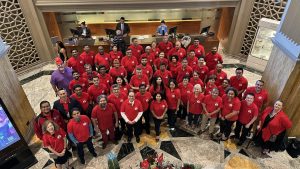 As a community-based organization, continuous outreach and engagement are essential to ICANN’s work. ICANN carries out these efforts via various activities, including through its Supporting Organizations (SOs) and Advisory Committees (ACs). In the case of the At-Large Advisory Committee (ALAC), outreach and engagement efforts in APAC falls toAPRALO– the Asian, Australasian, and Pacific Islands Regional At-Large Organization. And one such effort by the APRALO is the APRALO ICANN Readouts. An APRALO ICANN Readout calls APAC community members to examine topics discussed at an ICANN public meeting, with the goal of mapping implications for individual Internet end users in the region, … Read more
- DNS Abuse
 23 February 2026. The At-Large Community is gearing up for the ICANN85 Community Forumtaking place on 7-12 March 2026 in Mumbai, India, where one of several areas of priority for us is the evergreen topic of DNS Abuse Mitigation. The At-Large Advisory Committee (ALAC) had first initiated a cross-community conversation on this topic via a plenary session at the ICANN83 Policy Forum in June 2025 in Prague, Czech Republic, and is now hosting afollow up plenary session at ICAN85 on 10 March 2026 to progress the DNS Abuse Mitigation agenda. As we head into ICANN85, the At-Large Community’s participation is … Read more
- WSIS+20: A Step Forward
 WSIS+20: A Step Forward, But Implementation Is Key The recently adoptedhigh‑level document on the twenty‑year review of the World Summit on the Information Society (WSIS+20) reflects compromise, but also important progress. From the end‑user perspective, several outcomes stand out as wins. The vision of a people‑centred, inclusive, development‑oriented information society has been reaffirmed, alongside the principle of multistakeholder cooperation and stronger international collaboration. Most notably, the Internet Governance Forum (IGF) has been granted a permanent mandate, with sustainable funding for its secretariat. This ensures continuity, enhances intersessional work, support to national and regional initiatives, and broadens participation. A structured government … Read more
- APRALO on Regional Internet Registry GovernanceThe Second RIR Governance Document Still Lacks Real Accountability. Before we start discussing the second draft, we need to first give a well-deserved acknowledgement to the ASO-AC for its dedication and leadership in reviewing and updating the Regional Internet Registry (RIR) governance policy. The journey from ICP-2 to this second governance draft represents meaningful progress which is not just in structure, but in clarity and responsiveness to community needs. The work is substantial, and the community recognises it. Moving towards the second draft of the RIR Governance document which is being positioned as a major step toward a more structured … Read more